Saint-Pierre: Helicopter Flight over the Volcano and Cirques
★ 4.6 · 66 reviews
- Our top pick: the volcano and the cirques in one flight
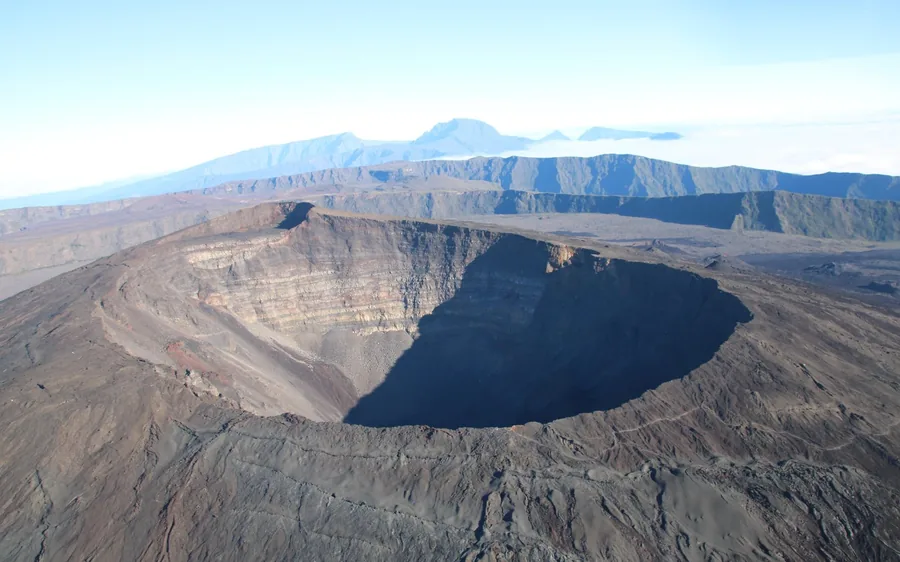
- Forty-five minutes from Saint-Pierre over Piton de la Fournaise
- 66 reviews at 4.6
- Free cancellation
No road
Fourteen kilometres by seven, ringed by walls a kilometre high, with somewhere around eight hundred people living inside it and not one road reaching them. A Cirque de Mafate helicopter flight crosses in about eleven minutes what a walker spends two days on. This is the clearest case anywhere on this island for buying a seat in the air.

Quick answer
The Cirque de Mafate has no road into it at all, so a helicopter is the only way to see inside it without walking for a day or more. A Cirque de Mafate helicopter flight crosses the cirque rather than lands in it; the flights that include Mafate start at $312 for thirty-six minutes, and our pick is the forty-five-minute volcano and cirques route at $375. The fifty-five-minute crossing at $422 adds Trou de Fer and both coasts.
Why there is no road
Three collapsed flanks of a dead volcano, and walls too steep and too wet to build on.
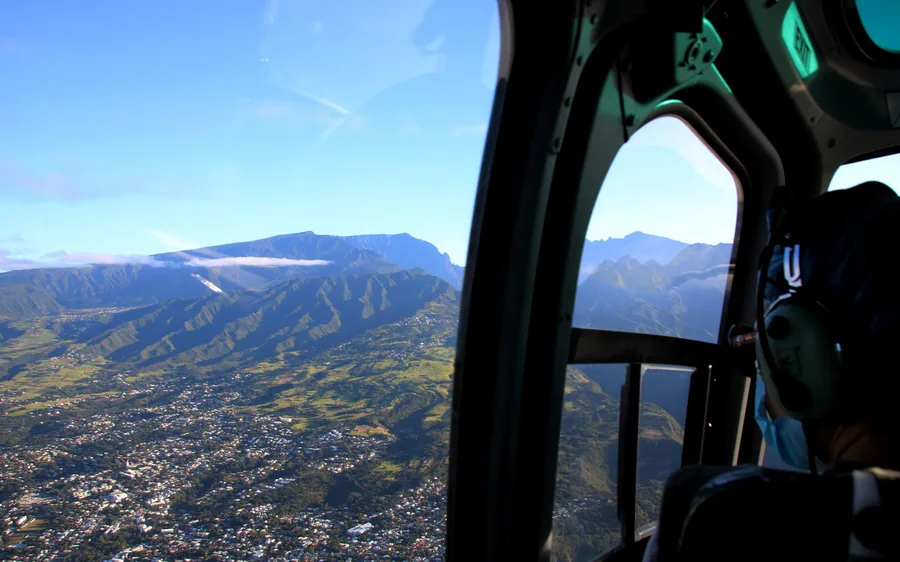
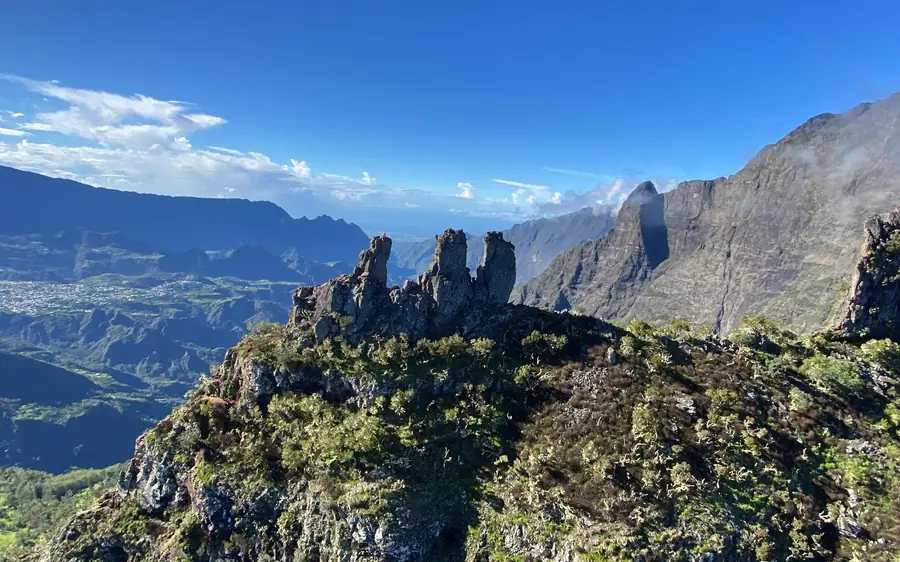
Mafate is not a valley. It is one of three amphitheatres left behind when Piton des Neiges — at 3,070 metres the highest point in the Indian Ocean — stopped erupting and its flanks gave way. The result is a bowl seven kilometres wide with walls that rise almost vertically for a thousand metres, cut by ravines that carry water off the ramparts after every storm.
Roads have been surveyed and never built, because there is nowhere to put one that does not get washed away. The cirque is reached on foot over the Col des Boeufs or up the bed of the Riviere des Galets, and that walk takes a strong day each way. Everything else arrives by air: building materials, gas bottles, the school supplies. The postman still walks his round, several days a week.
That is the fact that makes a Cirque de Mafate helicopter flight different from a scenic flight over somewhere with a viewpoint car park. There is no viewpoint car park. From the rim at Maido you see the cirque from outside and above one corner of it. From the air you are inside it, at the height of the ramparts, looking down on villages that no vehicle has ever reached.
What you see crossing Mafate
Eleven minutes on a Cirque de Mafate helicopter flight, and the shape of it changes completely three or four times.
You come in over the rim and the ground drops away a thousand metres almost vertically. This is the moment that makes people put the camera down.
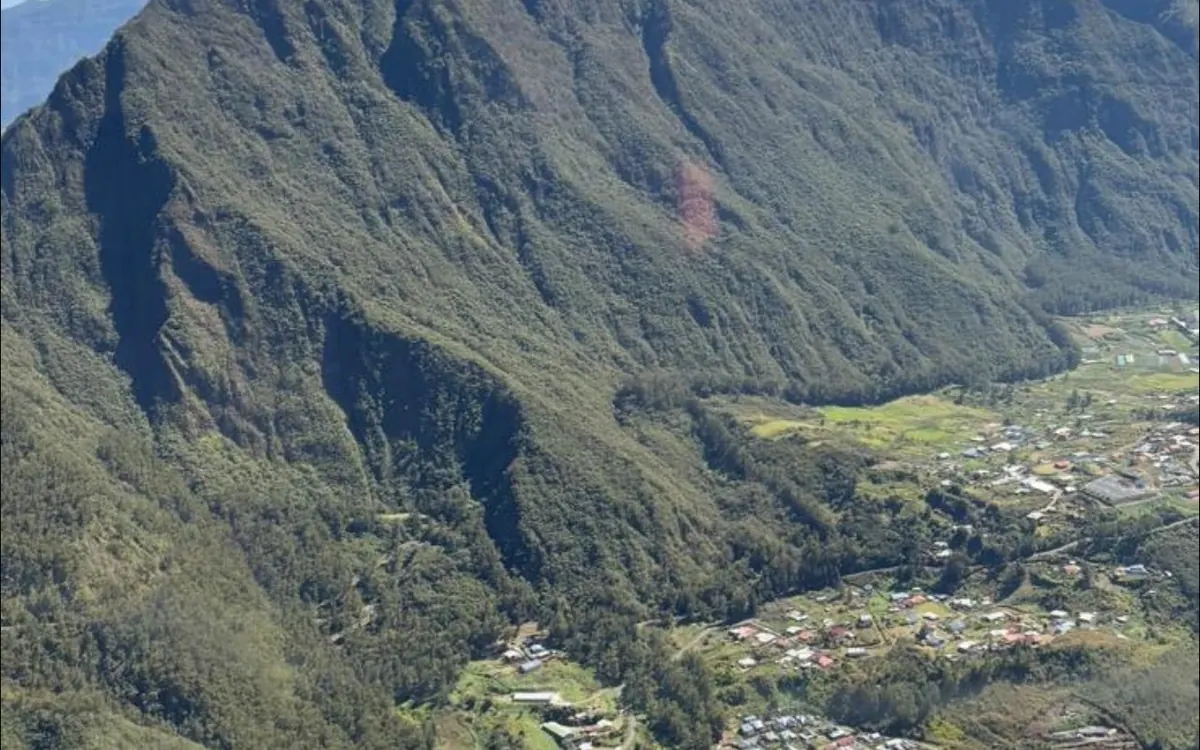
The largest of the ilets, a green plateau in the middle of the bowl with a school, a church and no cars. From the air the footpaths connecting it are clearly visible.
Smaller settlements strung along the high ground, each one a day’s walk from the next, all of them supplied from above.
The single drainage that takes every drop of water out of the cirque, running north-west to the sea through a gorge that narrows to almost nothing.
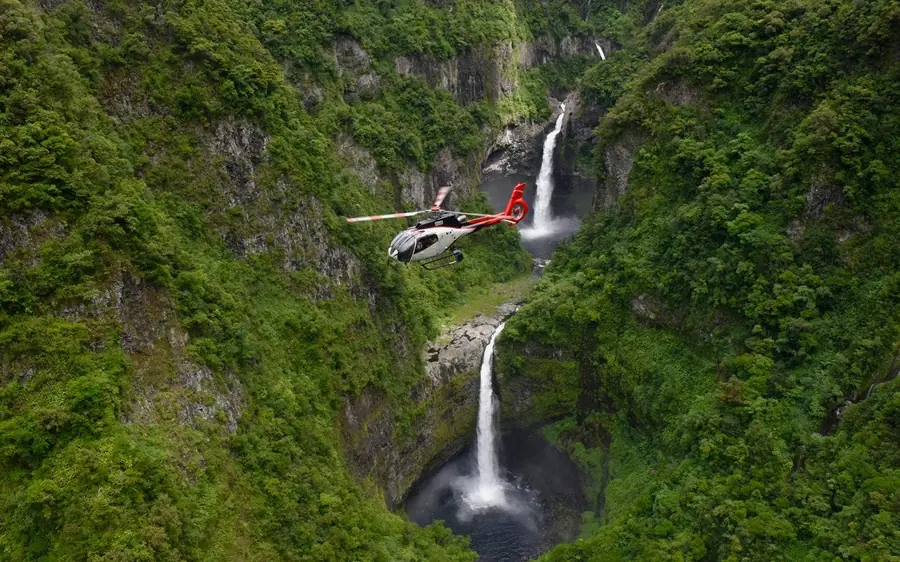
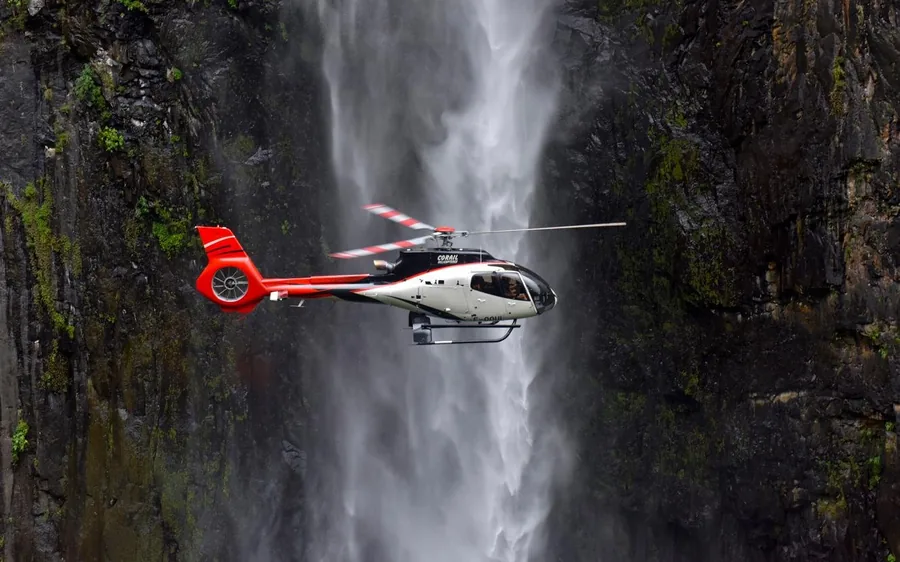
Dozens of them, each carrying a waterfall after rain, most with no name on any map.
On the longer routes you climb out over the ridge towards the summit, and the second cirque opens on the other side.
Mafate is the argument for flying here, and it is not an argument about money. There is no cheaper way to see inside this cirque; there is only a slower one that takes two days and a good level of fitness.
Is it worth it→Book direct
Every listing here that includes the cirque in its circuit, with the shortest option first and the two full-island crossings at the end.
★ 4.6 · 66 reviews
★ 4.7 · 190 reviews
★ 4.9 · 27 reviews
★ 4.1 · 7 reviews
★ 4.7 · 12 reviews
Choosing the route
Thirty-six minutes for Mafate alone, forty-five with the volcano, fifty-five for everything.
The thirty-six-minute three-cirques flight at $312 spends the highest proportion of its minutes over the cirques, because it does not go to the volcano at all. If Mafate is the only reason you are flying, this Cirque de Mafate helicopter flight is the efficient choice.
The forty-five-minute volcano and cirques flight at $375 is our overall pick for the island, and it gives Mafate less time than the flight above while adding Piton de la Fournaise. Most people want both, and this is the shortest route that delivers them.
The fifty-five-minute crossings at $422 take Mafate on the way through and add Salazie, Trou de Fer, the east coast and the lagoon. On a per-minute basis they are the best rate on the island, and they are the only flights that show you the whole thing.
None of them lands in the cirque. A Cirque de Mafate helicopter flight sold as sightseeing is an overflight; landing inside is done by the supply and transfer services that serve the residents.
Practical, before you book
The cirque is the part of a Cirque de Mafate helicopter flight most affected by the hour and the season.
Cloud forms inside the cirque and rises out of it. By eleven on a typical day the bowl is full and the walls are all you see.
May to October gives the steadiest mornings. December to March gives the greenest cirque and the most water in the ravines, with more lost flights.
Seats are assigned by weight for balance. On a circuit both sides get the cirque at some point, because the aircraft turns.
Sightseeing flights cross Mafate. Landing inside is a different service run for the people who live there.
On an island seventy kilometres across it covers all three cirques. Length matters less than it would somewhere larger.
If cloud closes the cirque on your slot, the operator will move you rather than fly you into a white bowl. Leave yourself days to be moved into.
The people below you
Eight hundred people, no cars, and footpaths instead of streets.
A Cirque de Mafate helicopter flight is unusual among scenic flights because the ground under it is inhabited. Somewhere around eight hundred people live in the ilets scattered across the cirque floor and on its shelves, in villages with names like La Nouvelle, Marla, Roche Plate and Ilet a Bourse.
There are schools down there, and a church, and small guesthouses for walkers on the GR R1 and GR R2 paths. There are no cars, because there is nothing for a car to drive on. Solar panels do the electricity. Helicopter rotations bring in gas bottles, building materials and anything else that cannot be carried on a back.
This is worth knowing before a Cirque de Mafate helicopter flight because it changes what you are looking at. The thin lines you see crossing the floor are not walking tracks laid on for tourism; they are the roads of the place. The helipads beside the villages are the loading bays. What looks from the air like wilderness is a working valley that simply never got a road.
Scenic operators respect that. A Cirque de Mafate helicopter flight crosses at height and does not hover over the houses, and the landing traffic you may see below is the supply service rather than sightseeing.
Common questions
Scenic flights cross it, and that is how most visitors see inside it. Landing in the cirque is done by services that supply the villages rather than by sightseeing operators, so treat a Cirque de Mafate helicopter flight as an overflight.
About eleven minutes, against one to two days on foot from the nearest road end.
All the cirque routes here. The shortest is the thirty-six-minute three-cirques flight at $312; our pick is the forty-five-minute volcano and cirques route at $375.
None. It is the only inhabited part of France with no road access, and everything that is not carried in on foot arrives by air.
From the rim at Maido you look into one corner of it from outside, and on foot you can walk in over the Col des Boeufs in a day. Neither shows you the bowl the way a Cirque de Mafate helicopter flight does.
The first departure. Cloud forms inside Mafate and rises, and by late morning the cirque is usually filled in.
Go deeper
From $196 to $422, and what a minute in the air is worth.
The verdictOne recommendation for each town, and why.
The chasmWaterfalls in a hole in the forest, reached no other way.
The volcanoTwo thousand six hundred metres of active crater.
The cirquesMafate, Cilaos and Salazie in thirty-six minutes.
The townsFour towns, and what each one puts under you first.